

How to Rent a Commercial Kitchen in California Without Delays
When a Stove Is Not the Problem, the Rules Are
California rarely blocks food ideas. It regulates the space where they happen. A caterer scaling up. A food startup testing demand. A school kitchen under renovation. The question appears quickly.
How do you rent a commercial kitchen without losing weeks to permits, inspections, or mismatched facilities?
The answer depends on timing, location, and how flexible the kitchen itself needs to be. Fixed sites work in some cases. Others quietly fail under scheduling pressure. Understanding those differences early can save real money and time.
Understanding What It Means to Rent a Commercial Kitchen in California
A commercial kitchen is not defined by size alone. It is defined by compliance.
Health departments expect NSF-rated equipment, proper ventilation, grease management, temperature controls, and documented sanitation processes. California adds another layer with county-level enforcement that can vary widely.
When businesses rent a commercial kitchen, they are often renting approval as much as square footage. The kitchen’s existing permits, inspection history, and layout matter as much as ovens or prep tables.
It appears simple on paper. In practice, details decide whether the kitchen can legally support your operation.
Why California Has Fewer Available Kitchens Than You Expect
The demand for licensed kitchens outpaces supply in most regions. Urban centers feel it first.
- Zoning restrictions limit where food production can occur.
- Shared kitchens operate on tight schedules, often booked months ahead.
- Many facilities were designed for one purpose and resist adaptation.
This explains why a kitchen for rent looks perfect online yet falls short during inspection or scheduling. Flexibility, not aesthetics, tends to matter more.
Fixed Kitchens Versus Mobile Solutions: A Practical Comparison
| Factor | Fixed Commercial Kitchen | Mobile Kitchen Trailer |
|---|---|---|
| Location | Permanent address | Delivered to the site |
| Permitting | Tied to the facility | Often pre-certified |
| Scheduling | Shared or limited | Dedicated use |
| Setup time | Immediate if available | Requires delivery |
| Use cases | Ongoing production | Temporary or remote needs |
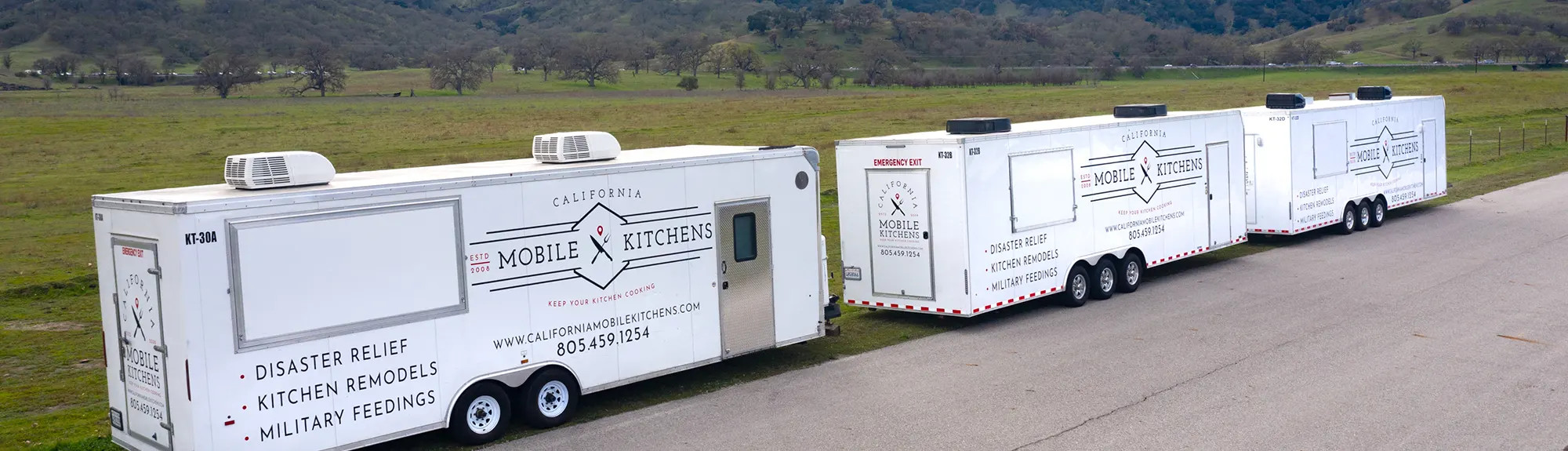
A mobile kitchen trailer is often overlooked until constraints force the issue. Remodels, disaster response, festivals, or remote operations tend to expose the limits of fixed kitchens quickly.
The Permitting Reality Most Guides Skip
Permits do not transfer simply because you rent space.
In California, operators may still need:
- A health permit in their own business name
- Food safety certification
- Local fire approval depending on the equipment
Some commercial kitchens handle this well. Others leave tenants navigating agencies alone. That difference rarely appears in listings.
When renting kitchen space, ask who carries responsibility for inspections, grease disposal, and utilities compliance. The answers matter.
Costs That Do Not Show Up in Listings
Hourly rates attract attention. They rarely tell the full story.
Additional costs may include:
- Storage fees
- Cleaning requirements beyond normal use
- Mandatory staff hours
- Limited access windows
Mobile kitchens often price differently, typically by duration rather than hours. For longer projects, that structure can become more predictable.
Many operators underestimate indirect costs by focusing only on base rent.
When a Mobile Kitchen Becomes the More Logical Option
Some scenarios almost demand mobility.
Kitchen renovations are one. Closing a hospital or school kitchen is rarely acceptable. A mobile unit preserves continuity.
Disaster response is another. Infrastructure may be compromised. Speed matters more than elegance.
Film sets and festivals fall somewhere in between. Temporary demand, strict timelines, and location constraints make traditional kitchens impractical.
In these cases, renting commercial kitchens on wheels reduces dependency on local availability.
Compliance and Equipment: What Inspectors Actually Look For
Inspectors tend to focus on function, not novelty.
- Temperature control and logging
- Ventilation performance
- Hand wash access
- Waste management
Mobile units designed for commercial use typically integrate these from the start. Fixed kitchens vary widely, especially in older facilities.
It may be worth asking for recent inspection reports rather than relying on assurances.
Scheduling Pressure and the Myth of Shared Access
Shared kitchens promise flexibility. Reality often differs.
Peak hours collide. Cleaning overruns happen. One late tenant affects the next. These issues rarely appear in contracts but surface quickly in operation.
For businesses with time-sensitive production, a dedicated kitchen space can reduce friction. Mobile units provide that separation by design.
A Reliable Mobile Kitchen Solution by California Mobile Kitchens
Considering a mobile kitchen solution may initially seem premature. Still, many operators reach this conclusion after facing ongoing challenges with space, timing, or facility availability.
California Mobile Kitchens is referenced by organizations that require fully compliant kitchen facilities delivered directly to their site. The value of this approach lies in its predictability rather than innovation. Delivery, installation, and ongoing support are managed within a clearly defined framework, helping reduce operational uncertainty during critical periods.
Request a tailored mobile kitchen solution from California Mobile Kitchens today.
Making the Decision Without Regret
The best choice often emerges by elimination rather than preference.
If long-term production with stable scheduling defines the need, a fixed commercial kitchen may suffice. If timing, location, or continuity matters more, mobility gains relevance.
Renting a commercial kitchen is less about finding space and more about managing constraints. California simply makes those constraints visible faster.
Frequently Asked Questions
Is it legal to rent a commercial kitchen in California for catering?
Yes, provided the kitchen is permitted and the operator holds required certifications.
How much does it typically cost to rent a commercial kitchen?
Costs vary widely by region, duration, and setup. Hourly, daily, and monthly structures exist.
Do mobile kitchens meet California health codes?
Purpose-built mobile units are designed to comply, though local approval may still be required.
Can I use one kitchen permit across multiple locations?
Generally no. Permits are location-specific.
Are mobile kitchens suitable for long-term use?
They can be, especially for extended renovations or remote operations, depending on support infrastructure.
Conclusion: Space Is Temporary, Compliance Is Not
Every kitchen solves one problem and introduces another. Understanding which problem matters most determines whether the solution holds. Some kitchens anchor operations. Others move with them. The difference shapes everything that follows.