

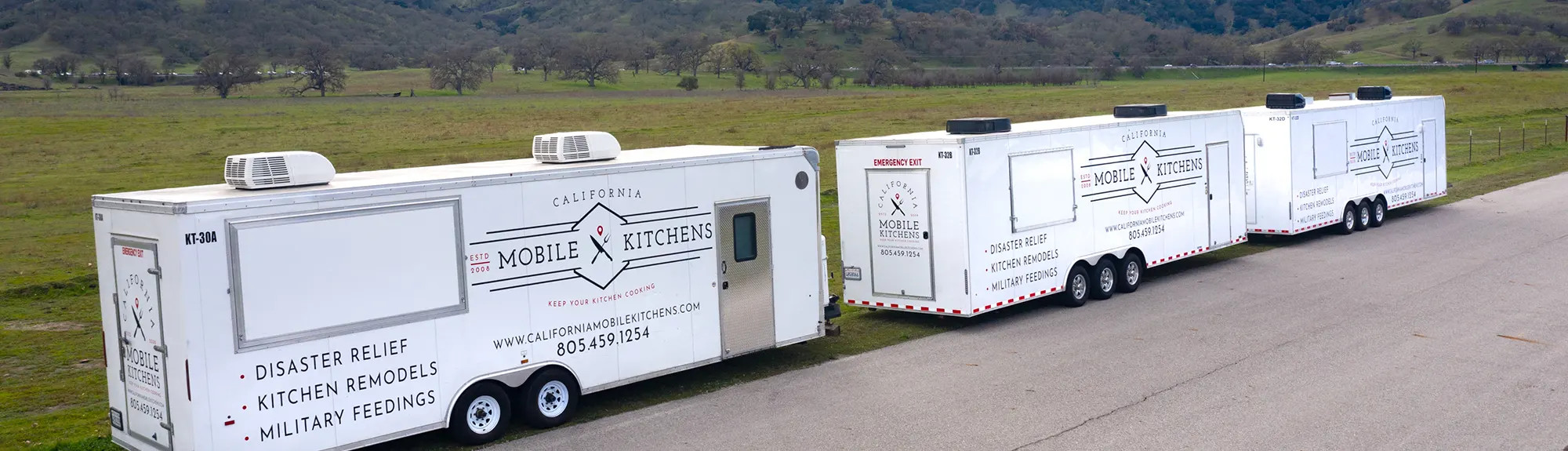
Food Truck for Rent in California: Permits, Pricing & Use Cases
Across California, a recurring pattern emerges: a restaurant remodel runs long, a wildfire displaces a community kitchen, or a production crew needs meals in a parking lot by tomorrow morning. At some point, a fixed kitchen stops being practical, and a food truck for rent becomes a working solution rather than a novelty.
That shift matters. Renting mobile food infrastructure is no longer limited to pop-up tacos or weekend festivals. It now sits squarely inside construction planning, emergency response, public sector logistics, and large-scale events where failure is not an option.
Understanding how food truck rental actually works in California requires looking beyond surface-level assumptions. Permits vary. Pricing is situational. Use cases are often more complex than people expect.
Understanding What “Food Truck for Rent” Really Means
Not every food truck for rent serves the same purpose. Some units are built for retail vending, others function as fully self-contained commercial kitchens on wheels. The distinction matters, especially when compliance and operational output are on the line.
A true mobile kitchen trailer is designed to replicate a commercial back-of-house environment. Griddles, fryers, hood systems, hand sinks, refrigeration, and fire suppression. These are not stripped-down carts. They are purpose-built kitchens that happen to be mobile.
It is believed, many first-time renters underestimate this difference and end up overpaying or under-equipping their operation. The right unit depends on volume, menu complexity, and how long the kitchen will be in service.
Permits and Regulatory Reality in California
California does not treat mobile kitchens casually. Mobile Kitchens Health requirements enforced by local health departments vary by county, including Los Angeles, San Diego, or Monterey.
A food truck for rent typically falls under temporary food facility or mobile food facility regulations. What complicates things is that some jurisdictions classify certain deployments as temporary kitchens rather than vending units, especially when tied to construction projects or emergency feeding.
Fire permits, health permits, zoning clearance, and waste management approvals may all apply. Power sources matter. So does greywater handling. The assumption that a rental provider handles everything is often incorrect.
This is where experience shows. Providers that have operated statewide for decades tend to anticipate permit friction before it becomes a problem. Others react after the fact.
Pricing Factors That Actually Influence Cost
People often ask for a flat number. That rarely exists.
Pricing for a food truck for rent is influenced by duration, equipment configuration, delivery distance, and support equipment. A short-term weekend rental looks very different from a six-month deployment outside a hospital or military base.
Temporary kitchen rentals may include refrigeration trailers, generators, water tanks, or ADA-compliant access. Those additions affect cost, but they also reduce operational risk.
It appears that long-term leases generally stabilize pricing, while short-term urgent rentals carry premiums tied to logistics and availability. The key variable is not the truck itself, but how integrated the solution needs to be.
Common Use Cases That Drive Demand
Events get the attention, but they are not the backbone of this industry.
Construction and renovation projects account for a large share of demand. When a cafeteria shuts down for remodeling, feeding staff cannot pause. A temporary kitchen fills that gap without disrupting operations.
Emergency response is another driver. Fires, floods, power outages. When fixed kitchens are compromised, mobile units become critical infrastructure.
Film and television productions rely heavily on food trailers for rent options, particularly in remote locations where catering access is limited.
There is also a growing segment of institutional users. Schools, correctional facilities, military installations. These environments require reliability and compliance, not branding or foot traffic.
Why Temporary Kitchens Often Replace Traditional Catering
Catering works until it becomes impractical.
When meal volume is high, or schedules extend for weeks, a temporary kitchen is more efficient. Food quality improves. Costs stabilize. Food safety oversight becomes clearer.
A mobile kitchen trailer allows on-site prep rather than transport-heavy workflows. That reduces spoilage risk and improves temperature control.
It may not be the obvious choice at first glance, but many organizations arrive at this solution after experiencing the limits of conventional catering models.
Operational Considerations People Overlook
Utilities come first. Power, water, waste. These must be planned before the unit arrives, not after.
Staffing is another blind spot. Renting a food truck does not include cooks or sanitation staff unless explicitly contracted. The kitchen is the infrastructure, not the labor.
Maintenance expectations also matter. Commercial equipment behaves differently under continuous use. Rental providers with in-house equipment specialists tend to resolve issues faster, simply because they know the units inside out.
Noise, heat, and ventilation affect placement. These details are often ignored until complaints surface.
Choosing the Right Provider in California
Not all rental companies operate at the same scale.
Some focus on event-based vending. Others specialize in industrial-scale food service. The difference shows up in response time, compliance support, and equipment depth.
Experience across multiple counties and familiarity with state and federal agencies reduces surprises, especially for public institution contracts.
California Mobile Kitchens has spent over three decades operating in this space, which likely explains their emphasis on long-term leasing and 24-hour service coverage rather than one off rentals. That orientation tends to align with clients who cannot afford downtime.
If your project timeline is still fluid, speaking with a specialist early can prevent costly mid-project changes. That conversation often reveals constraints you did not know existed.
When a Mobile Kitchen Trailer Makes More Sense Than a Food Truck
The terms are often used interchangeably, but functionally they differ.
Mobile kitchen trailers are generally larger and designed for high-volume, long-term operations, while food trucks prioritize mobility and compactness.
For high-volume feeding, extended deployments, or institutional use, trailers often outperform trucks. For short-term, mobile retail, trucks remain effective.
Understanding this distinction prevents mismatched expectations.
For redundancy, backup refrigeration, or modular expansion, trailer-based kitchens are more reliable.
Planning Ahead Reduces Cost and Risk
Last-minute rentals cost more. That is not a sales tactic; it is logistics.
Permits take time. Equipment configuration takes planning. Delivery schedules fill up during peak seasons.
Engaging early allows providers to recommend a kitchen for rent that fits both regulatory and operational needs, rather than forcing compromises under pressure.
If you are evaluating a food trailer for rent due to an upcoming shutdown or event, starting the conversation now gives you leverage later.
The Role of Experience in Mobile Kitchen Success
Mobile kitchens look simple from the outside. Stainless steel, wheels, generators humming in the background.
Operationally, mobile kitchens are complex.
Small decisions compound quickly. Equipment layout affects workflow. Placement affects compliance. Support response affects uptime.
Organizations that treat a temporary kitchen as a strategic asset rather than a stopgap tend to see better outcomes. That mindset often comes from working with providers who understand the operational realities, not just the rental transaction.
If you are exploring a food truck for rent in California, clarity upfront saves more than money. It saves time, reputation, and momentum.
And sometimes, that is the difference between disruption and continuity.
Partner with an experienced California mobile kitchen provider to ensure your food truck rental supports compliance, efficiency, and uninterrupted operations.
Frequently Asked Questions
Does the kitchen for rent include staff?
No. Staffing is usually handled separately unless contracted.
Is a kitchen for rent the same as a food truck?
Not exactly. A kitchen for rent may be a trailer or production unit without public vending features.
Is a mobile kitchen trailer different from a food truck?
Yes. Trailers usually support higher volume and longer-term use.
Can a mobile kitchen trailer support high-volume cooking?
Yes, if properly configured and matched to the menu.
Is short term rental more expensive than long term?
Daily rates are higher per day, but long term leases carry greater commitment.
Conclusion
A food truck for rent in California is neither a shortcut nor a guaranteed fix. Used thoughtfully for events, renovations, or emergency operations, it keeps operations moving through disruption, growth, or transition. The difference lies in understanding permits, realistic pricing, and how the unit will function day to day. That clarity shapes outcomes in meaningful ways, sometimes even before the truck ever arrives.