

Freezer Trailer Rental in California: A Complete Guide
Cold storage rarely gets attention until it becomes a problem. A delivery runs late. A walk-in fails overnight. An outdoor event stretches longer than planned. In California, where food safety enforcement is strict and operating conditions vary wildly by region, those moments carry real consequences.
That is where freezer trailer rental enters the conversation as a pressure-release valve for operations that cannot afford temperature drift.
It is a grounded look at how freezer trailer rental actually functions across California, where it fits, where it falls short, and how experienced operators decide whether it is the right move.
What a Freezer Trailer Is and Why It Exists
A freezer trailer is a self-contained, towable cold storage unit designed to hold frozen inventory at stable sub-zero temperatures for extended periods. Unlike a standard refrigerated trailer, these units are built for deep freeze consistency, not short-term chilling.
Freezer trailer rental tends to surface when permanent infrastructure is unavailable, unreliable, or temporarily insufficient. It may be for an event. It may be for a remodel. Sometimes it is an emergency response. The unifying factor is urgency paired with compliance.
California health departments do not offer much flexibility once food safety thresholds are crossed.
Some operators assume a freezer trailer is interchangeable with a mobile kitchen trailer or a food trailer for rent. It is not. A freezer trailer does one job. It holds temperature. That focus is also its advantage.
Situations Where Freezer Trailers Make Sense
Not every operation needs frozen storage on wheels. Many think they do, then realize refrigerated space would have been enough. Others underestimate their volume and scramble.
Event planners are frequent users. Large festivals in inland valleys or coastal zones often require freezer capacity for proteins, ice cream, or pre-prepped items days before service begins. Weddings with multi-day setups fall into the same category, particularly when venues lack back-of-house infrastructure.
Restaurants undergoing renovation rely on freezer trailer rental to maintain continuity. Shutting down entirely is expensive. Leasing a temporary solution keeps inventory usable and staff working.
Film and television productions are another quiet driver. Shoots run long. Locations change. Catering volumes fluctuate. A freezer on-site reduces resupply runs and stabilizes menus.
Emergency response scenarios are different. Here, freezer trailers often support a broader temporary kitchen deployment, paired with prep units, generators, and sanitation infrastructure. Speed matters more than optimization.
Sizes, Temperature Ranges, and Practical Capacity
Freezer trailers are typically offered in multiple lengths, often starting around 16 to 20 feet and extending past 40 feet for large-scale operations. Interior capacity matters more than length alone.
Shelving configuration, door placement, and airflow patterns all affect usable space.
Most freezer trailer rental units operate between minus 10 and zero degrees Fahrenheit. Some can hold colder setpoints, though it depends on ambient conditions and power stability.
California summers introduce challenges. A unit that performs perfectly in coastal fog may struggle in inland heat without proper airflow and generator sizing.
It is worth noting that freezer trailers are not designed for frequent door cycling. High traffic reduces temperature stability. Operations that require constant access may need a different layout or multiple units.
Choosing the Right Rental Without Overbuying
The most common mistake is oversizing. Bigger feels safer, until delivery logistics, power requirements, and site constraints complicate the setup.
The second mistake is undersizing, which creates frantic inventory rotation and uneven freezing.
Duration matters. A weekend event has different needs than a six-month renovation. Delivery distance matters too. California is large.
A freezer trailer rental in Los Angeles carries different logistics than one staged in the Central Valley or Northern counties.
Power access is another hinge point. Shore power simplifies everything. Generator-dependent setups require planning, fuel management, and noise considerations, especially in urban areas.
This is also where comparisons appear. A refrigerated trailer may suffice. A temporary kitchen may already include cold storage. Or a mobile kitchen trailer paired with a smaller freezer unit may be more efficient than one large trailer.
No solution exists in isolation.
Cost Factors Across California
Pricing for freezer trailer rental varies more than many expect. Daily rates exist, but weekly and monthly terms are more common.
Length of rental, trailer size, delivery distance, and season all influence cost.
Peak periods matter. Summer events, wildfire response seasons, and holiday production cycles tighten availability. In those windows, flexibility carries a premium.
Support equipment adds another layer. Generators, ramps, waste tanks, or additional refrigeration units are often separate line items.
Those costs are not padding. They reflect real operational requirements that, if skipped, create compliance risk.
A mid-range freezer trailer rental for a multi-week deployment often lands between the cost of lost inventory and the expense of permanent build-out.
That comparison, more than the sticker price, tends to drive decisions.
Compliance and Food Safety Realities
California does not negotiate on food safety. Local health departments expect temperature logs, clean interiors, proper drainage, and safe access.
A freezer trailer does not remove those responsibilities.
Operators remain accountable for monitoring. Trailers maintain temperature, but only if doors stay closed and power stays consistent.
Cleaning protocols matter. Cross-contamination does not disappear because storage is mobile.
Fire access, ADA considerations, and site placement also surface during inspections. Even a freezer trailer positioned incorrectly can trigger delays.
Experienced operators treat compliance as part of the rental decision, not an afterthought.
How Freezer Trailers Integrate With Broader Operations
Freezer trailer rental rarely stands alone. It often supports a kitchen for rent, a temporary kitchen setup, or a mobile kitchen trailer deployed nearby.
The freezer becomes the backbone, holding bulk inventory while prep and service flow elsewhere.
In catering environments, freezer trailers stabilize supply chains. In institutional settings, they act as overflow during peak demand.
In disaster response, they anchor feeding operations where infrastructure has been compromised.
There are limits. Freezer trailers are not production spaces. They do not replace cooking capacity.
Expecting them to solve workflow problems usually ends in frustration.
Streamline Your Project with Smarter Equipment Planning
Some providers specialize strictly in cold storage. Others operate within a broader ecosystem of mobile food service equipment.
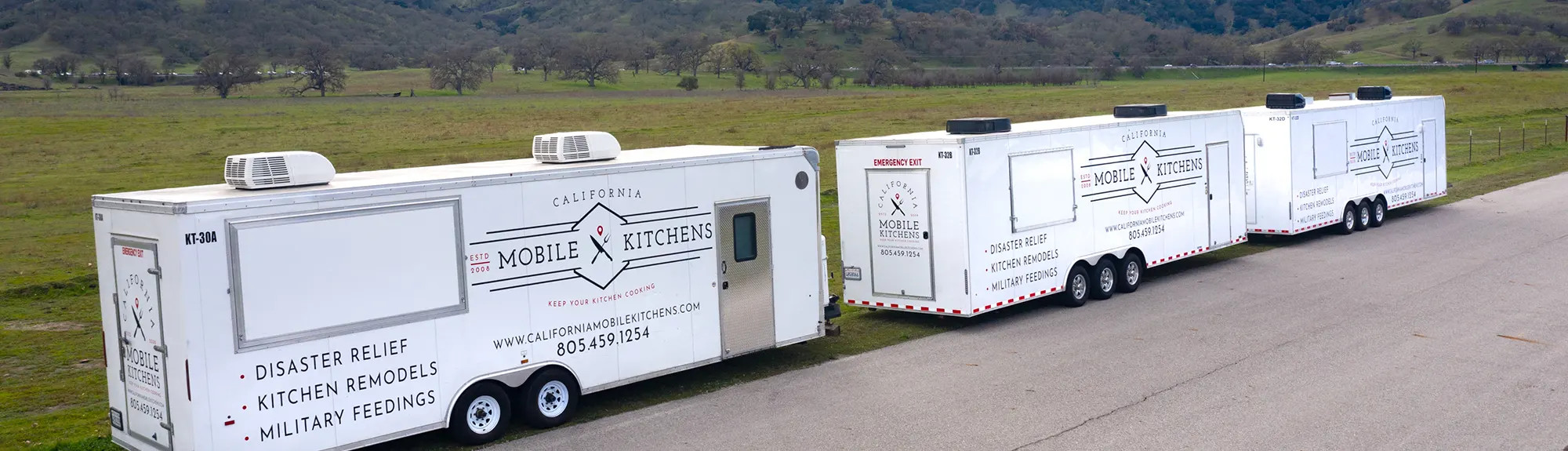
California Mobile Kitchens approaches freezer trailer rental as one component within a larger temporary operations framework.
For projects that already involve mobile kitchens or support units, that integrated approach can simplify planning without forcing unnecessary equipment.
That distinction matters when timelines are tight and coordination errors are costly.
Discover how integrated rentals streamline your project before timelines get tight.
When to Commit and When to Pause
Freezer trailer rental is effective when needs are clear. Volume estimates are realistic. Site conditions are known.
It struggles when assumptions replace planning.
If inventory turnover is high, refrigeration may suffice. If storage is long-term but static, a permanent solution may be more economical.
Rental shines in transition periods, seasonal surges, and controlled uncertainty.
The best decisions usually happen before the problem becomes visible.
Frequently Asked Questions
How quickly can a freezer trailer be deployed in California?
Timing depends on location, availability, and site readiness. In some cases, deployment happens within days.
Do freezer trailers require permits?
Local jurisdictions may require permits, particularly when trailers are part of food service operations.
Can a freezer trailer run without shore power?
Yes, with a properly sized generator, though fuel planning becomes critical.
Is a freezer trailer the same as a refrigerated trailer?
No. Freezer trailers are designed for sustained sub-zero temperatures.
Can freezer trailers be paired with a temporary kitchen?
Yes. They are often used alongside a temporary kitchen or mobile kitchen trailer for full operations.
Conclusion
Cold storage failures tend to announce themselves late, often when options are limited and costs escalate.
Freezer trailer rental offers flexibility, but only when matched to real operational needs rather than worst-case fears.
In California, where enforcement is strict and conditions vary by mile, clarity matters more than speed.
Planning early does not eliminate surprises, but it narrows them. And sometimes, that is enough.