
Commercial Kitchen for Rent Near Me: A California Guide
A restaurant closes for renovations. A food startup outgrows its home setup. A hospital needs backup capacity during construction. The question appears: Where can a reliable commercial kitchen for rent be found nearby, and how flexible is the solution really?
In California, the answer is rarely simple. Regulations vary by county. Availability shifts seasonally. And not all commercial kitchens serve the same purpose. Some are built for batch prep, others for high volume service, and some exist only temporarily on wheels. Understanding the differences matters more than location alone.
California’s Commercial Kitchen Landscape Is Fragmented
Search results for kitchen for rent often lump everything together. Shared kitchens. Commissaries. Church halls. Mobile units. The reality on the ground is far less uniform.
Urban counties such as Los Angeles, Alameda, and San Diego tend to have dense shared commercial kitchens. Rural regions often do not. Coastal areas face zoning pressure that limits new facilities. Inland areas may offer space, but with fewer permits already in place.
It appears that many operators assume proximity solves everything. It does not. Compliance, access hours, equipment layout, and transport logistics usually matter more than a few extra miles.
What “Kitchen for Rent” Actually Means in Practice
In California, it rarely is.
Some kitchens are licensed commissaries designed for food trucks. Others cater to caterers, bakers, or packaged food producers. Then there are mobile kitchen trailer options that bypass fixed locations entirely.
Below is a simplified comparison to clarify the differences.
| Type | Typical Use | Flexibility | Common Limitations |
|---|---|---|---|
| Shared commercial kitchens | Prep, baking, small batch | Hourly or monthly | Limited storage, scheduling |
| Private kitchen space for rent | Full-service cooking | Monthly lease | Higher cost, fixed site |
| Mobile kitchen trailer | Temporary operations | High | Requires site setup |
| Mobile kitchen rental | Emergencies, events | Very high | Short term focus |
Each option serves a different operational need. Choosing incorrectly often leads to delays, added cost, or compliance issues later.
Shared Kitchens Are Not Always Scalable
Shared commercial kitchens dominate search results for kitchen space for rent. They serve an important role, especially for startups and test concepts. Still, they come with tradeoffs that are not always obvious upfront.
Access is often time restricted. Storage may be limited to labeled racks. Equipment availability depends on other tenants. Scaling production beyond a certain point becomes difficult.
For businesses anticipating growth or temporary surges, shared space can become a bottleneck rather than a solution.
Permits, Health Codes, and Local Oversight
California health departments operate at the county level. What passes inspection in one jurisdiction may face additional requirements in another.
When you rent a commercial kitchen, responsibility for compliance is shared, but not always evenly. Operators remain accountable for food safety, sanitation logs, and approved processes. This matters when considering temporary setups.
Mobile kitchen rental units, when properly configured, often come pre-inspected to meet applicable codes. That reduces uncertainty, although site approval is still required.
When a Fixed Kitchen Stops Making Sense
Construction projects disrupt operations. Fires shut down facilities without warning. Large events overwhelm existing capacity. In these cases, searching endlessly for a nearby kitchen for rent may not be the fastest path.
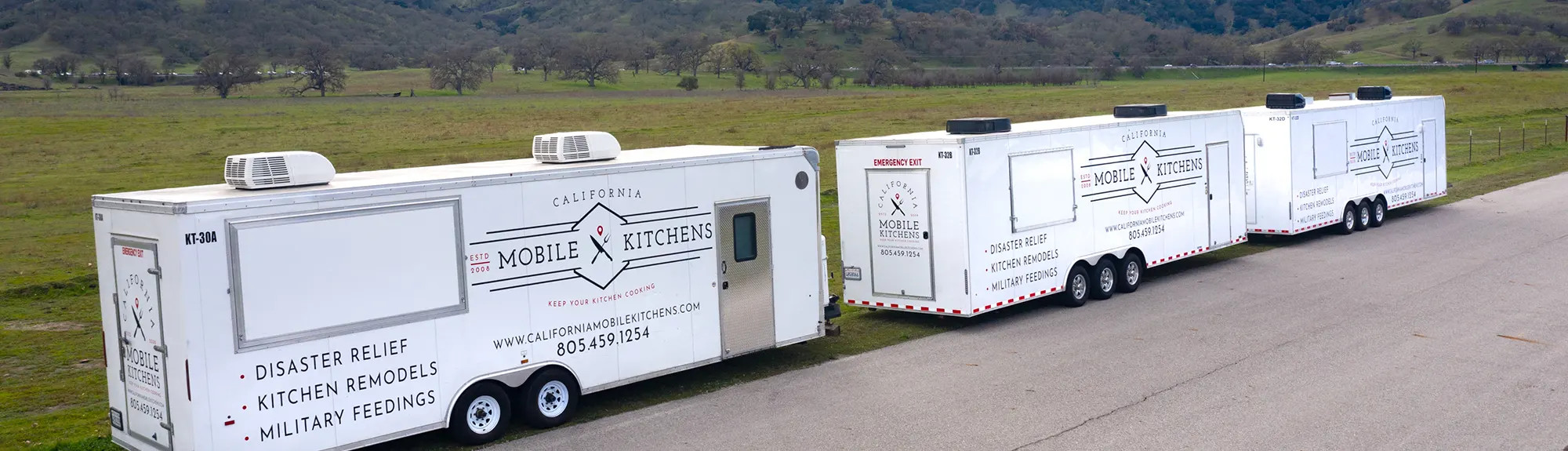
Mobile kitchen trailers exist for this reason. They function as complete commercial kitchens delivered to a site, connected to utilities, and removed when no longer needed.
It is believed that hospitals, schools, and government agencies increasingly rely on these units during renovations because they preserve continuity. Food service continues. Staff workflows remain familiar. The kitchen moves, not the operation.
Mobile Kitchens Are Not Just for Emergencies
There is a perception problem around mobile kitchen rental solutions. Many assume they are only for disaster relief or festivals. That view is incomplete.
Film productions use them to serve crews. Military contracts use them for remote feeding. Universities deploy them during phased construction. Restaurants use them to avoid full closures.
The flexibility is the core advantage. Location becomes secondary.
Cost Considerations Are Often Misjudged
Renting a kitchen space for rent on a monthly basis appears cheaper at first glance. Yet indirect costs add up: transportation time, lost production hours, equipment compromise, and scheduling conflicts.
Mobile kitchen trailer solutions usually look more expensive on paper. When downtime is factored in, the equation often changes. It may not be cheaper, but it is predictable. That predictability has value.
Evaluating a Kitchen Beyond Square Footage
Square footage is frequently emphasized. It should not be.
More important questions tend to surface later. Can the layout support your workflow? Is ventilation adequate for your menu? Are utility loads sufficient? How quickly can the kitchen be operational?
These details separate functional solutions from frustrating ones. They also explain why some operators shift from static rentals to mobile kitchens after a single failed attempt.
A Proven Mobile Kitchen Partner for When Conditions Shift
Thinking about a solution that avoids repeated searches for “kitchen for rent near me” every time circumstances change?
Some operators look toward established mobile kitchen providers as a contingency strategy. California Mobile Kitchens has supported long term projects across healthcare, education, government, and event sectors. Their experience lies less in novelty and more in execution. Delivery timelines, compliance readiness, and 24-hour operational support tend to matter when conditions are not ideal.
Plan ahead with California Mobile Kitchens and avoid last-minute disruptions.
FAQs
What permits are needed when renting a commercial kitchen in California?
Requirements vary by county, but typically include health department approval and adherence to food safety regulations.
Is a mobile kitchen trailer considered a commercial kitchen?
Yes, when properly equipped and approved, it functions as a fully compliant commercial kitchen.
Can a mobile kitchen rental be used long term?
Many are leased for months or even years, especially during renovations or large projects.
Are shared commercial kitchens suitable for restaurants?
They can be, but access limits and scheduling often make them better suited for prep rather than full service operations.
Does renting a kitchen include equipment?
Most commercial kitchens and mobile units include core equipment, though specifics vary by provider.
Final Thoughts
Finding a kitchen for rent in California is less about proximity and more about fit. Regulations, timelines, and operational pressure shape the right choice. Fixed spaces work until they do not. Mobile solutions fill gaps that permanent buildings cannot.
The real question may not be where the kitchen is located, but how quickly it can adapt when conditions shift again.