

Temporary Kitchen for a School Cafeteria Renovation: Keep Student Meals Serving While You Build
A school cafeteria renovation runs into a deadline that does not move: the next school day. Students still need breakfast and lunch, staff still need a working serving line, and your nutrition team still needs a safe, permitted place to cook — even while the cafeteria kitchen is demolished, rebuilt, or waiting on new equipment.
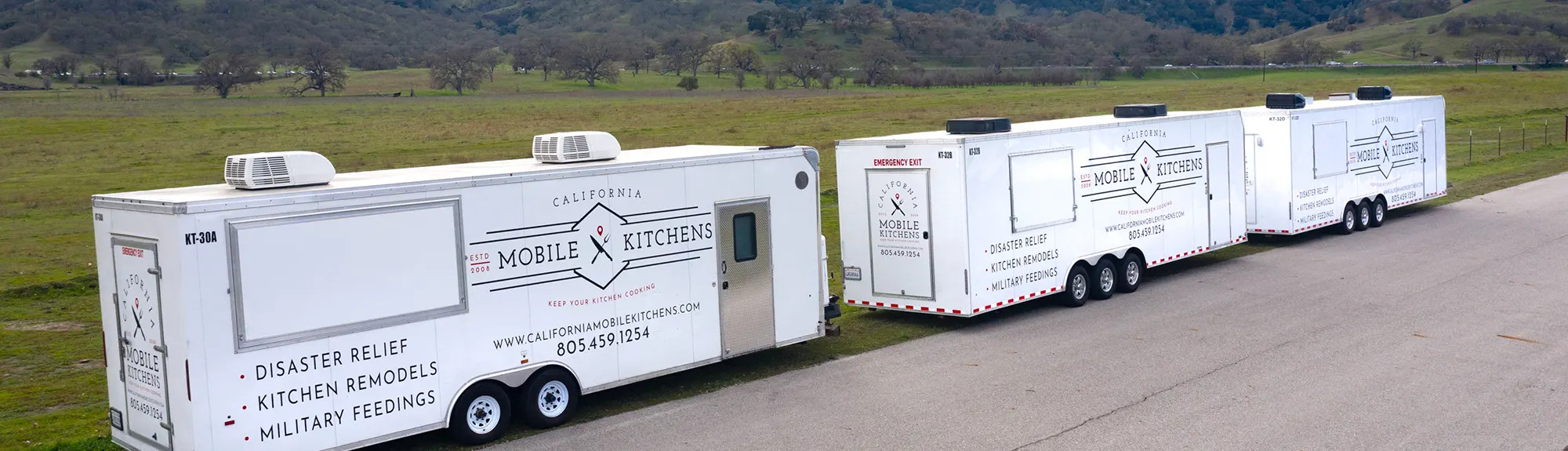
A temporary kitchen trailer solves that gap. California Mobile Kitchens (CMK) delivers and sets up a fully equipped commercial kitchen trailer on your campus, so your own team keeps serving your own menu, on site, for the full project — whether construction runs a summer break, a semester, or longer.
Size to your busiest lunch, not your enrollment
School food service is concentrated. Most of the day's cooking has to land in one or two tight lunch periods, so the right question is not how many students you have — it is how many meals your team must produce and serve in your busiest single service, and how much prep and holding room that menu needs.
CMK rents two main kitchen trailer sizes:
- 20-foot kitchen trailer — $6,000 per month. Serves 1–300 meals per meal.
- 32-foot kitchen trailer — $8,000 per month. Serves up to 1,000 meals per service.
Delivery and setup are covered in the lease agreement, so the full pricing — including delivery and setup — is in the lease before you sign.
If your busiest lunch sits near the 300-meal line, say so when you request a quote. Serving style, menu complexity, and tray or line assembly space can tip the answer, and sizing right at the start avoids a mid-project trailer swap while students are counting on you.
A school setup is a chain, not a single trailer
Cooking is only one link. A working school meal operation also needs dishwashing, prep room, and cold storage — and each one needs a planned place on campus.
Dishwashing. A kitchen trailer does not include a dishwasher. Dishwashing gets its own dedicated 24-foot dishwashing trailer, so trays, pans, and utensils keep moving between lunch periods without pulling cooks off the line.
Prep space. If your menu involves significant on-site prep — washing, chopping, mixing, assembling, and staging — a 32-foot prep kitchen trailer adds dedicated room alongside the kitchen trailer, instead of crowding prep into the cooking space.
Cold storage. Refrigeration and freezer trailers — 12-foot and 16-foot — hold ingredients and prepared food. They run on a simple 110V electrical connection, which makes them the easiest units on campus to place.
You add only the support trailers your service actually needs. A small elementary site and a large high school will not end up with the same layout, and they should not have to.
What your campus site needs
Every CMK kitchen trailer uses the same standard utility profile. Confirm these with your facilities and maintenance team before delivery:
- Power: 208–220V single-phase, 50-amp
- Fresh water: 3/4-inch connection
- Wastewater: 1 1/2-inch connection
- Propane: where required
- Ground: a level setup area with clear truck access for delivery
Schools usually have the utilities — the planning work is location and separation. The trailer needs to sit where trucks can deliver it, utilities can reach it, and your serving flow still works, without mixing kitchen deliveries and student traffic in the same path at the same time. Sketch the full layout once — kitchen, dishwashing, prep, cold storage, serving point, and student flow — instead of placing the kitchen first and fitting everything else around it.
No sewer connection near the setup area? Ask about the 250-gallon waste holding tank option when you request a quote. Available add-ons, priced by quote, also include a generator, ADA ramps and decking, and a grease trap. If students or staff need accessible entry, plan the ramp and decking footprint into the layout from the start, not after the trailer is placed.
Permits and documentation
Your district obtains its local health permits, with documentation supplied by CMK. CMK trailers are built to meet or exceed state and county health department requirements. Start the permit conversation when you book. A site that is utility-ready, with a clear water and wastewater plan, is easier to permit — and permit timing should never be what pushes a renovation start into the school year unprepared.
Time the changeover to the school calendar
The calendar is a school project's best tool, if you use it early:
- Walk the site early. Confirm the trailer location, utility tie-ins, truck access, and where dishwashing, prep, and cold storage will sit — while construction staging is still on paper.
- Size to your busiest service. Count meals in the peak lunch period, not total enrollment, and match the menu your team actually plans to serve during construction.
- Confirm the rental. A rental is confirmed once the lease is signed, payment is satisfied, and the certificate of insurance (COI) is received. Once confirmed, CMK schedules delivery and setup.
- Set up before you shut down. Aim to place and connect the temporary kitchen during a break, a weekend window, or before the main kitchen goes offline, so the first meals from the trailer are a test — not the first day of a new term.
Tell us your construction dates and your school calendar when you request a quote, and we will work delivery and setup around both.
What it costs, in context
The core decision is $6,000 per month for the 20-foot trailer or $8,000 per month for the 32-foot, with support trailers and add-ons priced by quote and full pricing — including delivery and setup — set out in the lease. For a district, the comparison is rarely trailer versus nothing. It is trailer versus cold meals trucked in from another site, a sharply reduced menu for months, or phasing construction so slowly around a working kitchen that the project cost climbs. A temporary kitchen on campus keeps your nutrition team cooking, keeps serving on site, and lets construction run at construction speed.
Request a quote
Planning a cafeteria renovation, a kitchen expansion, or a new-campus build-out? Fill out the Get Quote form on our website, call (805) 459-1254, or email tommy@californiamobilekitchens.com. Tell us your busiest meal count per service, your menu, your project dates and school breaks, and what your campus has for power, water, and wastewater, and we will recommend the right combination — kitchen, dishwashing, prep, cold storage, and add-ons — for your school. With 24-hour customer service, CMK is ready to help you plan even the smallest details. Keep your kitchen cooking.